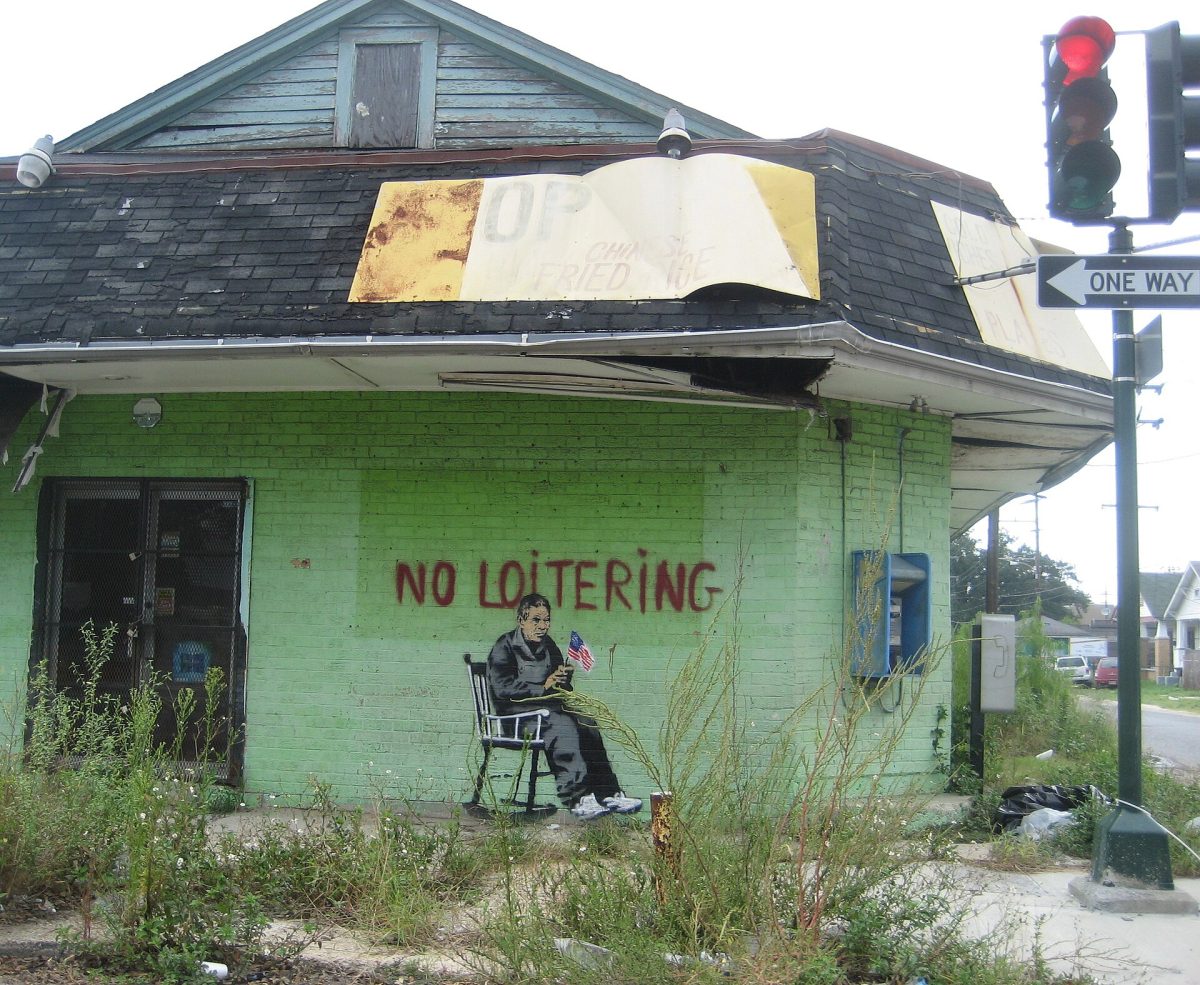
On Mar. 13, Reuters published their investigation into renowned anonymous English street artist, Banksy.
For decades, Robin Gunningham, the man behind Banksy has remained an enigmatic figure critically praised for his political art. Gunningham’s anonymity has been among the subjects at attention since gaining the attention of the public eye. Many have tried to uncover his identity, seeing his anonymity as a motivation for uncovering the artist.
Reuters finally succeeded.
They began with following several leads in Horenka, Ukraine — a village that suffered from “extreme damage” by Russian forces in 2022 according to a UNICEF report. They then interviewed several “Banksy-world insiders and experts” who refused to directly comment on the artists’ identity. However, Banksy’s footprints were discovered in U.S. court registries with Banksy allegedly having faced a misdemeanor charge. This charge was the last straw to revealing the identity of Banksy.
Banksy or Robin Gunningham, is a globally famous anonymous British street artist and political activist. A 2026 article by ‘The Guardian’ reports that Banksy is, “a middle-aged bloke from Bristol, probably with kids and a mortgage.” One of Banksy’s first major works was “The Mild Mild West” on a building in Stokes Croft, Bristol. This piece depicts, “a teddy bear about to throw a Molotov cocktail at three riot police officers, in reference to a recent incident between police and some of Bristol’s youth earlier that year.” According to a 2021 article by ‘Banksy Explained’. This mural was made in 1999 when Banksy was speculated to be only 25 years old. “The Mild Mild West” was a stepping stone in his journey which would eventually lead Banksy to world wide fame for his political and controversial art.
The Mild Mild West, Bristol, 1999
Miramonte High School English teacher Colleen Williams believes anonymous artists can deliver stronger messages because the work isn’t pinned to a social image.
“Art made without names lets people see it with a more open mind, without thinking about the artist’s reputation or background,” Williams said. If an artist is anonymous, stereotypes won’t be pinned to their art and people will focus on the art, not the controversy of the artist.
“It allows a sense of freedom for both the artist and for how the audience interprets the art.” Williams said. Williams believes that it is important to preserve anonymity because it encourages the world to think more critically of the art.
Anonymity as a whole typically brings negative connotations to mind. It brings the image of bad actors and other unsavory characters in history which lends to this bad reputation. However, anonymity is not always bad or harmful, as is the case with Banksy whose art has touched millions and provoked thoughtful conversation in the art world. In this, we find that anonymity is not always a tool used to harm; it can be used for change.
Artist anonymity is a unique matter wherein an artist can extricate oneself from themselves — their ego, giving their art a fresh, clean-slate perspective that influences the exigence of a work of art. Banksy specifically uses his anonymity for personal and legal purposes. Indeed, he uses his mask as protection against charges of vandalism and potential malicious targeting, but it was his brand’s mystique that allowed his work to remain universally accessible and cause a unique appeal.
Banksy’s lawyer, Mark Stephens, works to maintain the value of being an anonymous artist figure comes from the fact that “working ‘anonymously or under a pseudonym serves vital societal interests’” and that it “protects freedom of expression by allowing creators to speak truth to power without fear of retaliation, censorship or persecution – particularly when addressing sensitive issues such as politics, religion or social justice.”