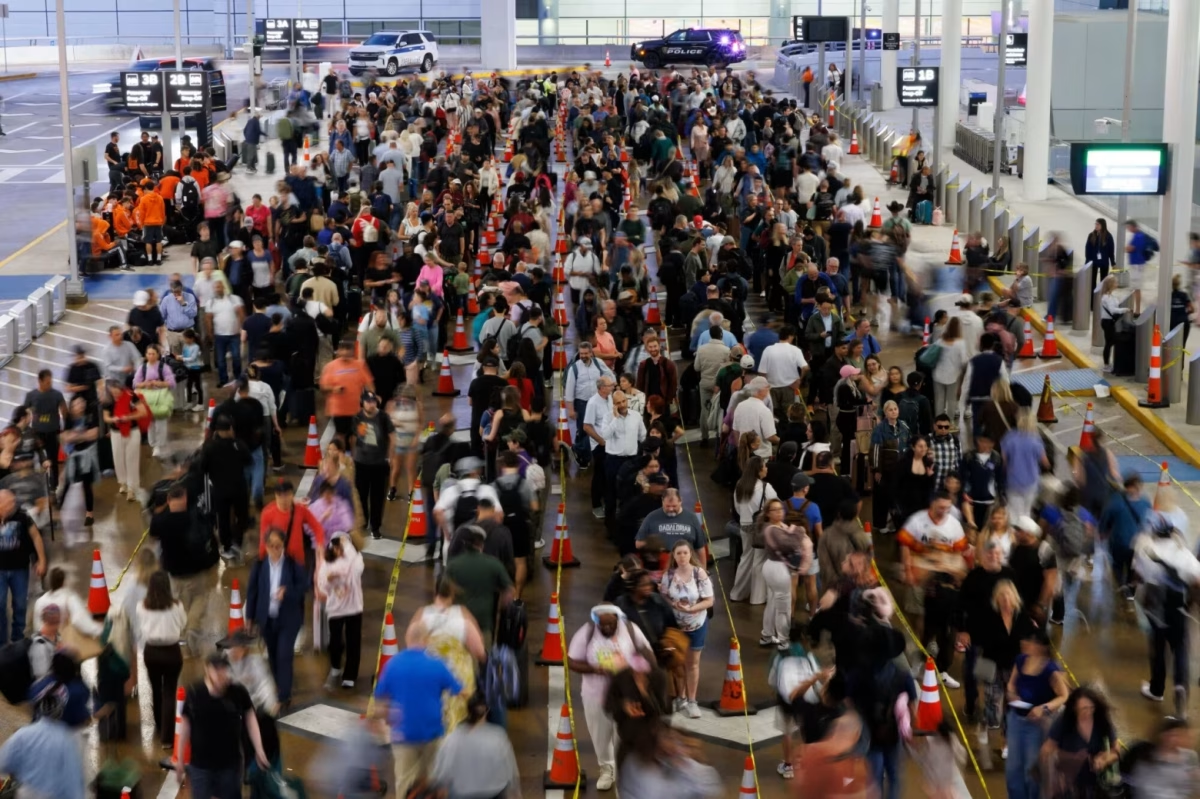
A wave of Transportation Security Administration (TSA) staffing disruptions tied to a federal funding lapse is affecting airport operations across the country, with uneven impacts in the Bay Area. Beginning on Feb. 14, 2026, TSA agents have called-out of work or quit entirely which has led to hours spent in security and baggage check-in all over the country. Although the Bay Area wasn’t as heavily impacted as William P. Hobby (HOU), Hartsfield-Jackson (ATL) and Louis Armstrong International (MSY), local airports still face long lines and flight delays.
The TSA strikes arose from the Department of Homeland Security (DHS) shutdown due to inadequate funding. Almost all Democratic Senators refused to fund the DHS until further regulation of immigration officers. For most airports, the TSA is funded as part of the DHS budget, impacting TSA agent paychecks. Oakland International Airport (OAK) is included in the repercussions of the reduced DHS cessation. However, two major airports in the Bay Area have not been affected by the shutdown: San Francisco Airport and Sonoma County’s Charles M. Shultz Airport.
TSA officers nationwide have continued working without pay during the funding lapse, even as call outs have increased. Some workers have called out sick or abandoned their shifts as financial strain grows. Nationally, call out rates among TSA officers have climbed well above normal levels, limiting the agency’s ability to maintain full operations at some airports. Security wait times have increased during “peak travel” periods, including spring break, as fewer officers are available to staff screening lanes. Officials say the situation has not yet reached crisis levels locally, but staffing shortages have reduced flexibility and slowed passenger throughput. Federal officials have taken additional steps to stabilize operations, as Immigration and Customs Enforcement (ICE) agents have been deployed to assist at some airports nationwide, though none have been reportedly assigned to Bay Area airports.
“[A]s the weeks continue, if this continues, it’s not hyperbole to suggest that we may have to quite literally shut down airports, particularly smaller ones, if callout rates go up … a lot of these officers can’t afford to come in,” TSA Deputy Administrator Adam Stahl said in an interview with “FOX & Friends.”
Travelling through Oakland International Airport, longer security lines and reduced staffing have begun.
“Morale is down extremely. People are questioning, ‘Should I find another job now?’,” TSA worker and union representative Joseph Cerletti said in an NBC Bay Area interview. Friday, Mar. 13, was the first day Oakland TSA agents hadn’t received anything on their paychecks. The previous weeks, they only collected a few days worth of pay. According to Cerletti, with rising grocery and gas prices, TSA employees can’t afford the commute to their airport and many rely on the airport food bank.
At San Francisco International Airport (SFO), security screening operations have remained comparatively stable. TSA at SFO is part of the TSA’s Screening Partnership Program which leaves private contractors in charge of the agents’ pay.
“While all security procedures are managed and supervised by TSA staff,” SFO said, “the screeners themselves are employed by a private company called Covenant Aviation Security and paid through a different funding source which is not impacted by the current partial Federal Government shutdown.”
Most TSA agents finally received their back pay on Mar. 30, but many are still struggling to catch up on bills.
“So I don’t know how we’re going to ever have money to pay for another shutdown,” TSA officer in Colorado, Angela Grana said in an interview with PBS News. After 76 days, marking the longest shutdown in history, President Donald Trump signed a House-passed bill to fund most of the DHS on Thursday, Apr. 30. A few weeks prior, the Senate had passed a DHS funding bill, covering most operations except for ICE and Border Patrol.
“House Republicans wanted more of a guarantee that ICE would eventually be funded…” Congressional correspondent Lisa Desjardins said in a PBS News interview, “The ICE funding was in fact a real issue for the GOP.”
The 2026 DHS funding lapse exposed significant vulnerabilities in airport security staffing, resulting in nationwide disruptions, particularly impacting airports like Oakland while SFO’s private partnership model remained stable. Although the 76-day shutdown concluded and back pay was eventually issued, the crisis highlighted the severe financial strain on TSA workers and prompted debate over aviation security funding structures.