March madness has always been known for chaos, buzzer-beaters, and fan favorite heroes. For years, the tournament’s biggest appeal was the chance that a small school could shock the country and make a deep run, But in 2026, that classic Cinderella story feels weaker than ever. For the second straight year, no mid major team reached the Sweet 16, and the bracket is dominated almost entirely by power conference schools.
One major reason is the rise of name, image, likeness (NIL) and the transfer portal. Bigger programs now have the money to pay top players and pick talents from smaller schools easier than before. That means mid to low major teams, such as Saint Mary’s, Gonzaga, and Miami Ohio to name a few, often lose their best players before they ever get the chance to build something special. Power programs have started treating mid-majors like a kind of talent farming system. Instead of having strong rosters building chemistry for a couple of years, smaller schools are constantly rebuilding their roster.
This growing financial divide is already affecting how coaches view the sport. “I think that parity is great for the game, but things change,” Arizona coach Tommy Lloyd said to reporters after his team beat Utah State in this year’s tournament. “I think once finances become part of it, there’s going to be a breaking point for some of the lesser programs that just don’t have the finances”
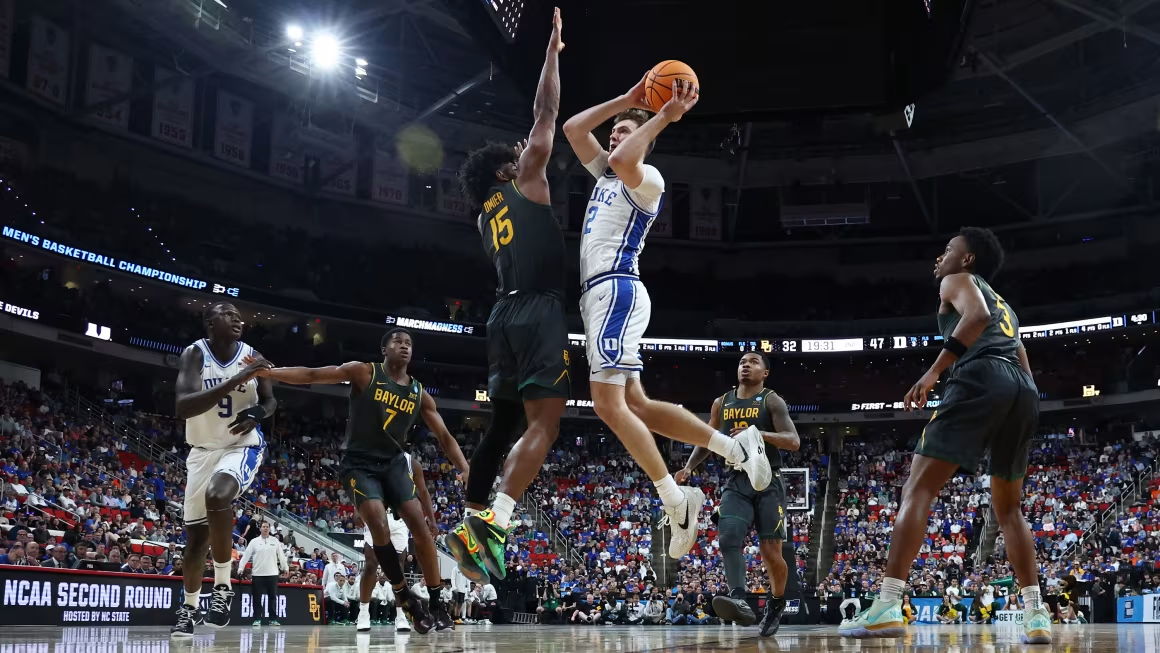
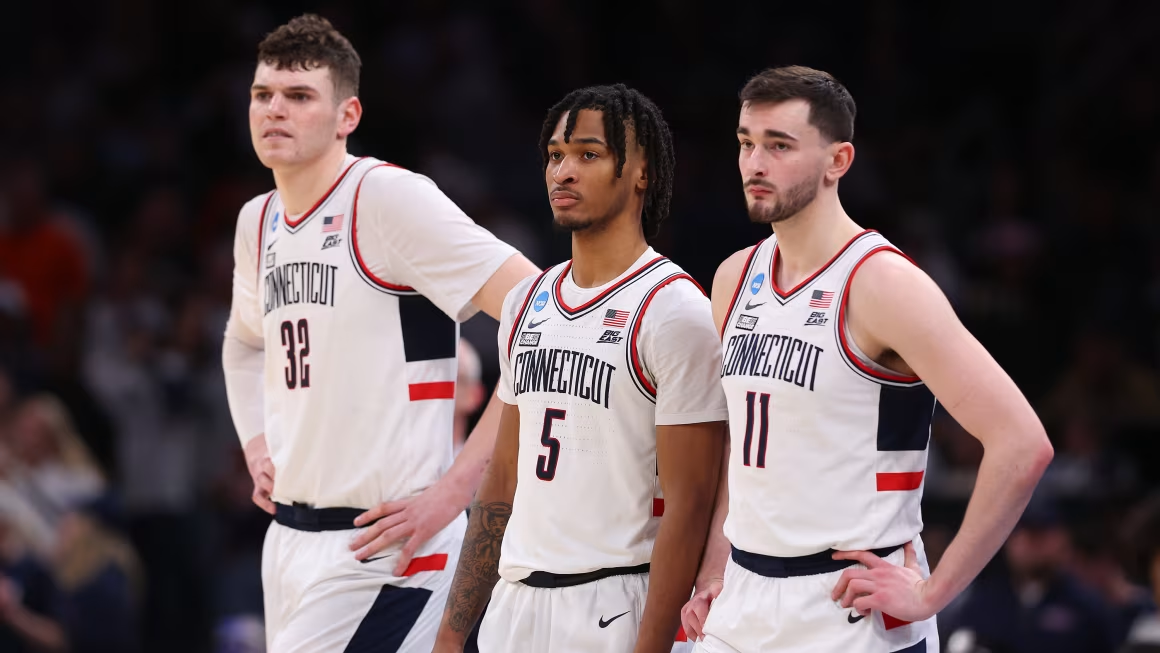
Another problem arising is that the gap between top teams and everyone else keeps growing. The average margin of victory in the first round of this year’s tournament was 17.4 points, the highest since the tournament grew in 1985. When favorites like Duke, Kansas, and Uconn, are stronger and more experienced, upsets become much harder to pull off.
Conference realignment has also played a role. Over the last decade, schools and leagues have shifted around in ways that have weakened many mid-major conferences. When the best teams leave for larger conferences, the leagues left behind become less competitive. That hurts the quality of bids that used to make March Madness exciting. In the past, leagues like the Missouri Valley, the Atlantic 10, Ivy League, and the Colonial Athletic Association regularly produced real contenders. Now many of those conferences had nearly no bigs and lacked any real chance against power conference schools. Even major conference programs acknowledge how much money now impacts success. After UCLA failed to reach the Sweet 16, coach Mick Cronin said in a post game interview, “I’d like about 5 more million [dollars]. There’s my answer.”
NIL, the transfer portal, and realignment all contribute in painting a prominent picture issue. Together, they have changed the landscape of college basketball in a way that favors power conference schools. Even when a lower seed makes the tournament, it is less and less likely to have the same chance old Cinderella teams once had.
March Madness is still entertaining, but it doesn’t have the same magic it once had. The tournament has become more about who has the deepest pockets than glass slippers and fan favorites. Cinderella may not be completely gone, but she is slowly fading.