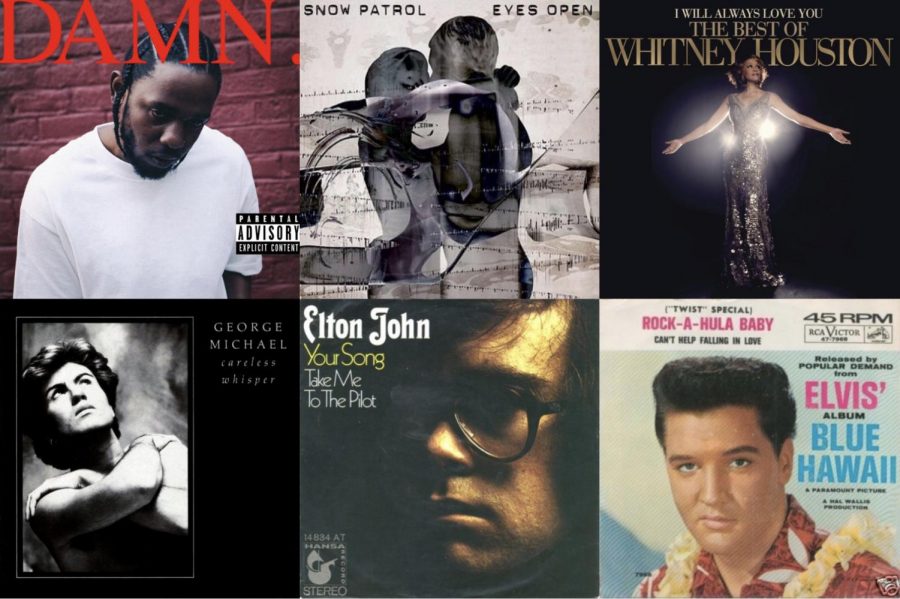
From the era of unwavering companionships, unbroken promises, and deep personal connections to the rise of talking stages and situationships, the landscape of romance has shifted dramatically over the decades. Long before Édouard-Léon Scott de Martinville made the first known recording in 1860 of the French folk song “Au Clair de la Lune,” music has been a form of expression, especially when it comes to love. As modern dating culture moves away from traditional milestones, toward a more flexible approach to companionships, our love music has evolved to reflect these new emotional rhythms. As we prepare for Valentine’s Day, there is no better time to take a trip down memory lane and uncover the changes in love music throughout the generations.
Our journey starts in the 1950s, where the top love song was Elvis Presley’s “Love Me Tender.” In the wake of World War II, society craved lasting love and passion. This decade was dominated by the smooth vocal harmonies of artists like Frank Sinatra and Nat King Cole, whose heartfelt deliveries blend elements of rhythm and blues with jazz to create a signature post-war sound. Love songs of this period mirror the era’s strict social norms and traditional gender roles. Lyrics were centered on the pursuit of “the one and only:” the sacred promise of staying together forever. However, as the polished music gave way to a more restless generation, the polite romanticism of the 50s began to pave the way for social defiance and experimentation that will define music for generations to come.
The 1960s and 70s brought transformative genres that mirrored the rapid evolution of romantic culture. The 60s saw the rise of folk rock, classic rock, and a sharper pop edge to the love songs of the 50s. As love culture moved away from the traditional materialistic values, love songs became instruments for social defiance. During this era, female vocalists began to assert greater dominance in relationships. By the 1970s, the industry embraced more sophisticated production techniques, with disco and funk capturing the decade’s feminist strides and its questioning attitude towards established cultural norms. Disco embodied the essence of romance through a lens of modern independence and individualism, stripping away the sentimentality and melodrama that had characterized the love songs of the previous generations.
The 80s were defined by upbeat poppy melodies, including Whitney Houston’s “I Wanna Dance with Somebody” and Madonna’s “Crazy for You.” These tracks blended the raw passion of romance with a new musical intensity, fueled by a technological revolution that captured the sheer excitement of falling in love. The addition of synthesizers and sophisticated drum machines resulted in sharper, more powerful, and high definition textures that defined a new musical landscape. Lyrically and culturally, these songs reflect the shift toward a more casual dating scene. The era moved away from the formal expectations of previous decades in favor of low-pressure experiences like grabbing a pizza or watching a movie.
The dramatic style returned in full force in the 90s, with overdramatic and melancholy vocals characterized by “all or nothing” commitment. Celine Dion’s “My Heart Will Go On” embodied the omnipresent melancholic vocals. These melodies leaned heavily into the aesthetics of romantic suffering, intense heartache, and dramatic longing. It was the decade where finding “the one” was a necessity, and every breakup was earth-shattering.
With the turn of the millennium, the addictive nature of love was vividly captured by the era’s greatest artists. This period marked the world’s introduction to pop and R&B queen Beyonce, who defined the decade of anthems, ranging from delicate “Halo” to the high-energy “Crazy in Love.” Similarly, Mariah Carey’s “We Belong Together” reflected a new age of digital intimacy, where longing was expressed through phone calls and heartfelt voicemails. The decade also birthed a dramatic breakup culture, particularly through female artists who wrote sharp lyrics fueled by angst and revenge. It was an era where love wasn’t just a feeling, but a high-stakes drama played out over texts and bedazzled flip phones.
The 2010s introduced a new landscape for romance, shaping a dating culture deeply rooted in technology and defined by talking stages and situationships. Music from this decade frequently explored the in-between stages of relationships, providing a sharp contrast to the “all or nothing” declarations of love seen in previous generations. This era saw the rise of sad pop with tracks like Adele’s “Someone Like You” and John Legend’s “All of Me.” Furthermore, Taylor Swift revolutionized breakup culture by turning personal heartbreak into hit songs. Ultimately, this decade captured the tension of navigating the thin line between casual digital connections and the enduring weight of real emotions.
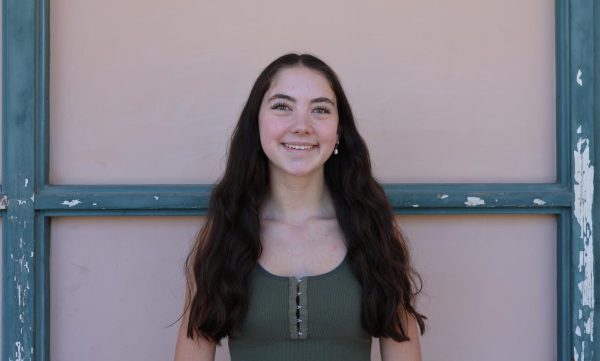
Finally, we arrive in the 2020s, an era defined by a transition from traditional romance toward a more realistic, and at times cynical, perspective on love. This shift is deeply influenced by the rise of situationships and a focus on self-love over codependency. “I think modern love songs are more about breakups rather than moments in love. Older generations wrote love songs as goals and dreams people wanted to achieve,” junior and choir student Sadie Gibson said. Today’s hits often trade aspirational romance for raw vulnerability.
2025’s most streamed love song, “Die With a Smile,” by Lady Gaga and Bruno Mars, proves this. While the track is undeniably popular, its slow, melancholy notes and Gaga’s emotional delivery lean into a sense of sadness rather than the joys of love. The song’s chorus focuses on apocalyptic devotion, saying “if the world was ending, I’d wanna be next to you.” Instead of covering the beauty of being in love, this song portrays overly devoted love. The song reflects how this generation’s music focuses on fighting for love and desperation in a chaotic world.
Senior Chloe Lu describes dating in this generation with the song “Honeymoon Avenue” by Ariana Grande. This song is about the painful realization that a relationship is coming to an end. Grande captures the bittersweet moment of realizing a relationship has lost its spark, and the desperation to return to the happy, effortless beginning of a relationship. “When people lose their spark or things get complicated, people tend to move on fast, hence situationships and things of that sort,” Lu said. This perspective taps into a harsh reality that when a connection is difficult, the modern instinct is to quit, rather than invest the effort to fix it.
Dating culture is not the only thing that has evolved. Shifts in gender roles and societal expectations have fundamentally altered how artists express themselves in songs. “Male artists are emotionally vulnerable, while female artists are more assertive and self-defining. In older generations, males were more stoic while women were patient and waiting,” Gibson said. This newfound independence is reflected in modern music, where female artists take the lead with songs of self-reliance, such as Beyoncé’s “Formation.”
The current music environment reflects a shift toward more emotional vulnerability, particularly among male artists of the generation. “One line that gets me every time from Grentperez’s “Reason Why” is ‘You cover when you’re smiling to only dim how much you shine.’ Artists like Grantperez often sing in softer or higher registers, which is definitely not representative of every male artist in this era, but which may represent a form of ‘soft masculinity:’ being emotionally open and romantic while still having a clear sense of self,” Lu said. Such songwriting serves as a prime example of a generational shift in male self-expression, representing the exit of previous gender and social norms.
Songs provide rhythm and melodies that every human being, regardless of age or background, can relate to. Love songs allow us to experience the full spectrum of passion, pain, and the beauty of human connection in every note. This musical journey mirrors our own societal transition from the rigid expectations of the past to the vulnerability of today’s complex digital age. As we navigate an era of self-love and situationships, these songs serve as more than just background noise; they are the historical markers of how we value ourselves and each other. This Valentine’s Day, as we look back on the melodies that defined past generations, we find that even with uncertainty and the cynical approaches of love, the impulse to sing about it is one thing that never truly fades.